



Texas Delta-8 THC Is Back in the Controlled-Substance Crosshairs: What Changed and Why It Matters
Learn how the Texas Supreme Court’s Sky Marketing decision and DSHS rules changed Delta-8 legality, criminal risks, and consumable hemp compliance in Texas.
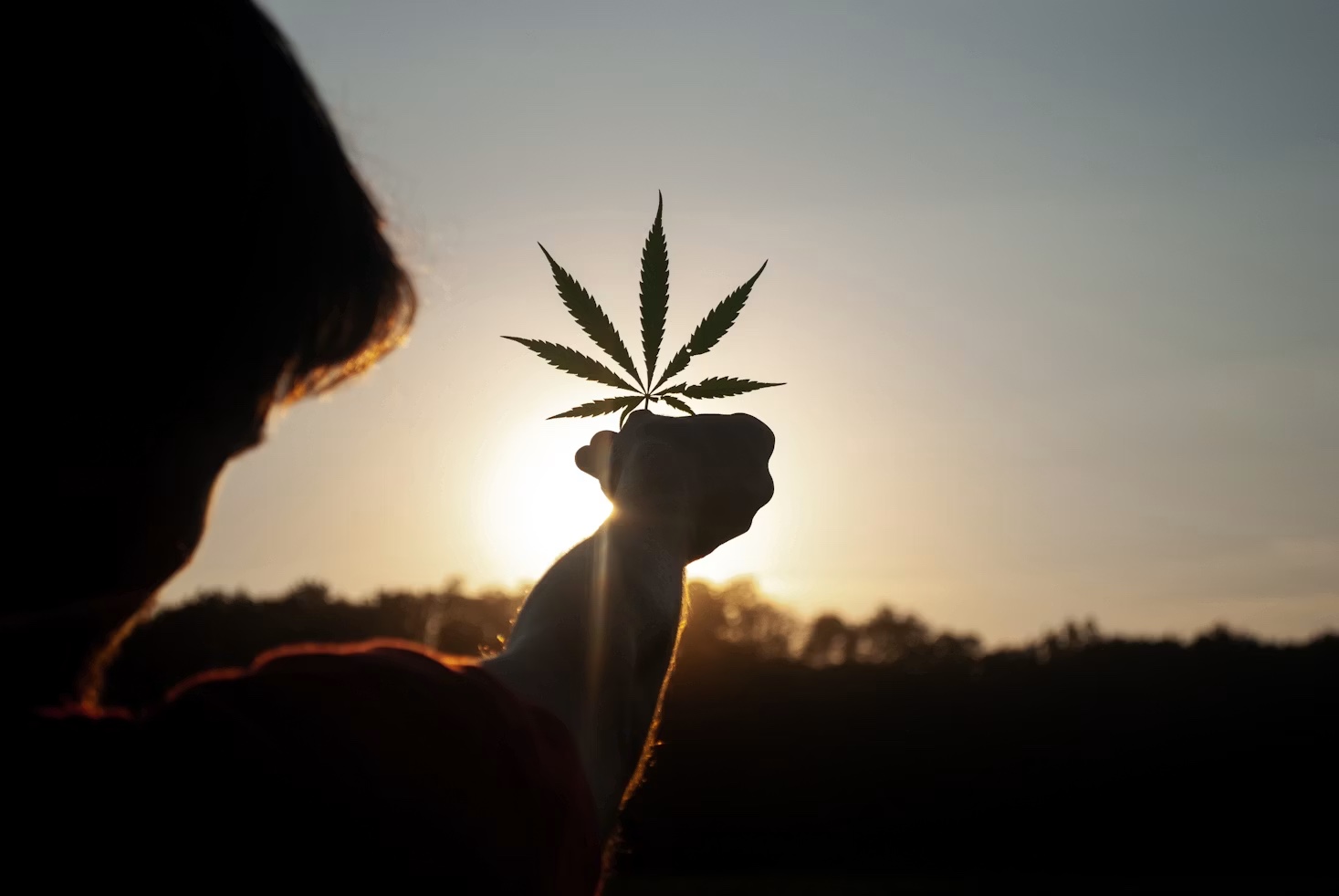
For several years, many Texas consumers and retailers treated products labeled “hemp-derived Delta-8” as lawful so long as the product stayed below the familiar 0.3% delta-9 THC threshold. That assumption is no longer safe for high-potency manufactured Delta-8 THC products.
The key development was not the widely publicized 2025 THC-ban bill. That bill was vetoed and never took effect. The pivotal change came from the Texas Supreme Court’s May 2026 decision in Texas Department of State Health Services v. Sky Marketing Corp., followed by a July 2026 DSHS notice reinstating controlled-substance scheduling clarifications.
The result: a product’s “hemp-derived” label does not, by itself, remove it from Texas controlled-substance law.
The short version
- Texas legalized and regulated qualifying hemp in 2019, generally using a 0.3% delta-9 THC dry-weight threshold.
- DSHS later took the position that concentrated, manufactured Delta-8 THC is a controlled substance, even if produced from hemp-derived CBD.
- Businesses challenged that position and obtained a temporary injunction that interrupted DSHS enforcement.
- On May 1, 2026, the Texas Supreme Court reversed the injunction in Sky Marketing.
- DSHS reinstated its THC and marihuana-extract scheduling clarifications effective July 31, 2026.
- Potent manufactured Delta-8 products may now be treated as controlled substances rather than compliant hemp products.
How Texas got here
The 2019 hemp law opened a regulated market—but not necessarily for every THC product
Texas enacted HB 1325 in 2019 after Congress adopted the federal Farm Bill. HB 1325 defined hemp to include the cannabis plant and its derivatives, extracts, cannabinoids, and isomers with a delta-9 THC concentration of no more than 0.3% on a dry-weight basis. It also excluded qualifying hemp and THC in hemp from Texas’s controlled-substance definition and created DSHS’s consumable-hemp-product framework. HB 1325, ch. 764 (2019)
That framework supported a fast-growing market in CBD, Delta-8, and other products. But it left an important question: Does the hemp exception cover a highly concentrated THC product manufactured in a laboratory from hemp-derived CBD, simply because the starting material came from hemp?
DSHS said no to potent manufactured Delta-8
In 2021, after objecting to a federal scheduling change, DSHS revised its controlled-substance schedule and publicly announced that Delta-8 THC products were controlled substances. DSHS’s position was not directed at trace Delta-8 naturally occurring in hemp. It addressed commercial products containing levels of manufactured Delta-8 far beyond the nearly undetectable amounts that occur naturally in the cannabis plant.
The agency’s position was that a potent manufactured Delta-8 product can fall within the schedule’s treatment of synthetic equivalents, derivatives, and isomers with similar chemical structure and pharmacological activity to THC in cannabis. The later Supreme Court opinion recounts this regulatory history. Tex. Dep’t of State Health Servs. v. Sky Mktg. Corp., No. 23-0887 (Tex. May 1, 2026)
The court fight: Sky Marketing
Texas Delta-8 manufacturers, retailers, and consumers challenged DSHS’s 2021 position. They argued that the 2019 hemp law decontrolled Delta-8 derived from hemp and that DSHS lacked authority to schedule it as a controlled substance.
The trial court issued a temporary injunction preventing enforcement of the challenged definitions, and the Austin Court of Appeals upheld that temporary relief. During the litigation, this injunction effectively allowed the manufactured Delta-8 market to continue without DSHS enforcement of those 2021 clarifications.
That injunction was temporary—not a legislative declaration that potent manufactured Delta-8 products were lawful.
The May 2026 decision changed the picture
On May 1, 2026, the Supreme Court of Texas reversed the temporary injunction in Sky Marketing. The Court held that the DSHS Commissioner acted within the substantial authority the Legislature gave her to modify the controlled-substance schedules in response to federal scheduling developments.
The Court rejected the argument that the 2019 hemp law unmistakably legalized all THC that could be derived from hemp. In the Court’s view, the statutory hemp exception protects the plant and its naturally occurring compounds; it does not clearly strip DSHS of authority to treat high-potency, manufactured Delta-8 THC as a controlled substance.
The Court also recognized an important narrow point: Delta-8 that naturally occurs in the hemp plant falls within the statutory hemp exception. But that does not resolve the status of commercial Delta-8 products made by converting CBD and concentrated to psychoactive levels. Sky Mktg.
July 31, 2026: DSHS reinstates the scheduling clarification
Following the decision, DSHS issued a notice reinstating clarifications to the definitions of tetrahydrocannabinols and marihuana extract in the 2021 Schedule of Controlled Substances. The notice was published July 10, 2026, at 51 TexReg 4597, and became effective July 31, 2026. Texas DSHS controlled-substances schedules notice
That July 31 date is the central current-law date. It restored the scheduling posture that had been blocked by the temporary injunction.
What about the 2025 “THC ban” bill?
The 2025 story is important, but it is easy to confuse with the current rule.
In 2025, the Legislature passed SB 3, which would have broadly restricted consumable hemp products containing cannabinoids other than CBD or CBG and would have added several criminal offenses. Governor Abbott vetoed the bill on June 22, 2025. SB 3 therefore did not become law, and none of its proposed criminal penalties took effect.
Governor Abbott’s SB 3 veto statement; SB 3, enrolled version
The present issue is different. It is not that a new felony statute took effect. It is that the Sky Marketing decision and the DSHS reinstatement notice restored a basis for treating certain manufactured Delta-8 products as controlled substances under existing law.
Why the felony concern is real—but requires product-specific analysis
Texas did not create a new “Delta-8 felony” in July 2026. But if the State treats a particular product as illicit THC rather than lawful hemp, the existing Texas controlled-substance penalty statutes may apply.
For example, possession of a Penalty Group 2 substance in an amount under one gram is a state-jail felony under Tex. Health & Safety Code § 481.116.
The applicable charge in any case will depend on the product’s actual chemistry, the amount alleged, the person’s conduct, and the State’s proof that the substance was not compliant hemp.
In other words, product labels and marketing descriptions are not dispositive. A “hemp-derived” representation does not answer whether the finished product falls within the narrow statutory hemp exception or within the reinstated THC scheduling treatment.
The separate consumable-hemp compliance rules still matter
Texas also has updated DSHS consumable-hemp rules, effective March 31, 2026. Those rules address licensing, retailer registration, testing, certificates of analysis, labels, packaging, recalls, transport, records, and age restrictions. They require testing and disclosure for delta-9 THC, total delta-9 THC, and total THC, and they apply the 0.3% total delta-9 THC dry-weight standard. DSHS adopted consumable-hemp rules; DSHS Consumable Hemp Program
Those rules remain critical for products that qualify for the consumable-hemp program. They do not, however, make a potent manufactured Delta-8 product lawful merely because the product was made from hemp-derived CBD.
Bottom line for Texas retailers and consumers
As of August 3, 2026, Texas’s legal landscape is best understood this way:
- Compliant hemp products remain regulated through the DSHS consumable-hemp program.
- Trace, naturally occurring Delta-8 in hemp falls within the hemp exception.
- Potent manufactured Delta-8 THC products are again subject to Texas’s controlled-substance treatment after Sky Marketing and the July 31 DSHS reinstatement notice.
- SB 3’s proposed felony provisions are not in effect because the Governor vetoed the bill.
- Whether a particular product presents criminal exposure requires a fact-specific assessment of composition, manufacturing method, quantity, and proof.
This article provides general legal information, not advice on a specific product, investigation, or prosecution.
Sources
- Tex. Dep’t of State Health Servs. v. Sky Mktg. Corp., No. 23-0887 (Tex. May 1, 2026)
- Texas DSHS: Schedules of Controlled Substances
- Texas DSHS: Consumable Hemp Program
- HB 1325, ch. 764 (2019)
- Tex. Health & Safety Code § 481.116



Get In Touch Today - We're Open 24/7 365 Days A Year.
At Salinas Defense, your consultation request is confidential, and our team is here to help you take the next step with clarity and confidence.